
Electronics that speak the body’s language.
Ceryx builds analogue circuits that behave like real neurons, so an implant can listen to the body and respond the way a healthy nervous system would.
Why heart–lung synchronisation matters
In a healthy person the heart and lungs work in synchrony, coordinated by networks of neurons in the brainstem called central pattern generators. In heart failure the autonomic nervous system is thrown out of balance and that synchronisation is lost. Its loss is itself a marker of poor prognosis.
Conventional pacemakers deliver a steady, metronomic rhythm. Work by Ceryx’s founders at the Universities of Bristol, Bath and Auckland showed that restoring heart–lung synchronisation, rather than pacing at a fixed rate, improves cardiac output and can reverse the structural changes of heart failure in preclinical studies.
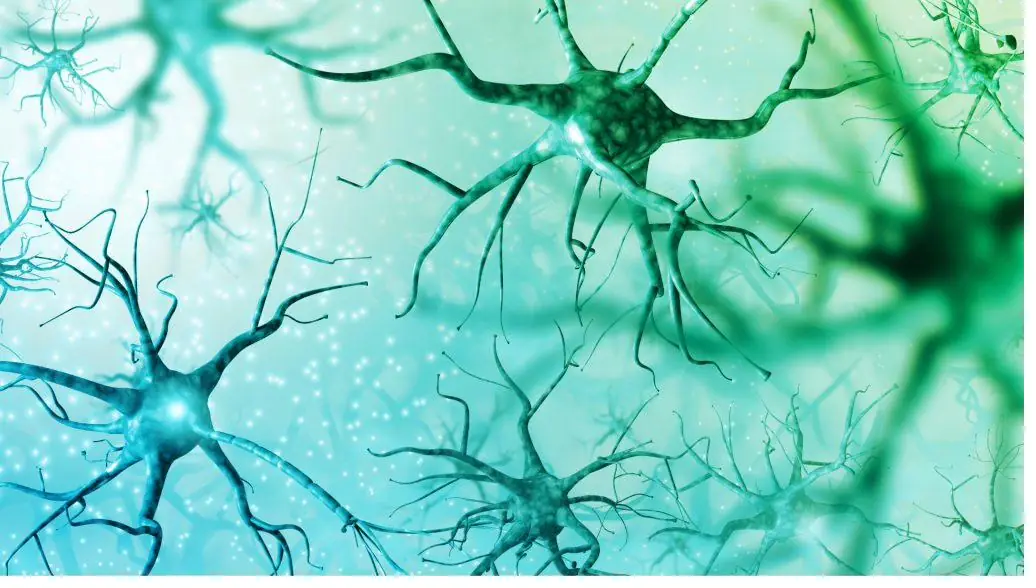
Artificial neurons in silicon
Rather than running software that approximates biology, Ceryx recreates it. Ion channels, cell membranes and action potentials are built directly in analogue circuitry. The resulting silicon neurons respond to physiological signals in real time and, connected into networks, reproduce the central pattern generators the body uses to coordinate breathing and heart rate.
Real-time response
Analogue processing means no sampling delay. The device reacts within the same breath, not the next one.
Published and peer reviewed
The underlying neuron design was published in Nature Communications (2019) and the pacing approach in Journal of Physiology.
Cysoni™
Cysoni, from the Welsh for synchronisation, is a single-chamber atrial pacemaker. It is implanted the same way as a conventional pacemaker, with one lead in the right atrium, so the procedure is familiar to every implanting cardiologist.
Unlike a conventional device, Cysoni restores the natural synchronisation between heart and lungs.
The intended patient is someone with heart failure with reduced ejection fraction, in sinus rhythm, with a narrow QRS complex, who remains symptomatic on optimal medical therapy and is not a candidate for cardiac resynchronisation.
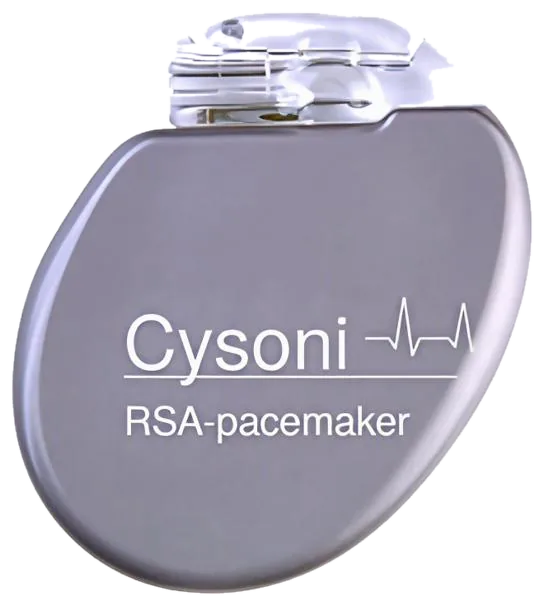
| Device class | Active implantable, Class III |
| Configuration | Single-chamber atrial pacing |
| Therapy | Heart–lung synchronisation pacing |
| Power source | Primary cell (non-rechargeable) |
| Status | Investigational, in development |
Eight patent families
A growing patent portfolio provides global protection across eight patent families.
Beyond heart failure, the same artificial-neuron platform has potential applications in other conditions driven by lost rhythmic control, including blood pressure regulation. These remain research interests; the company’s focus is Cysoni.